
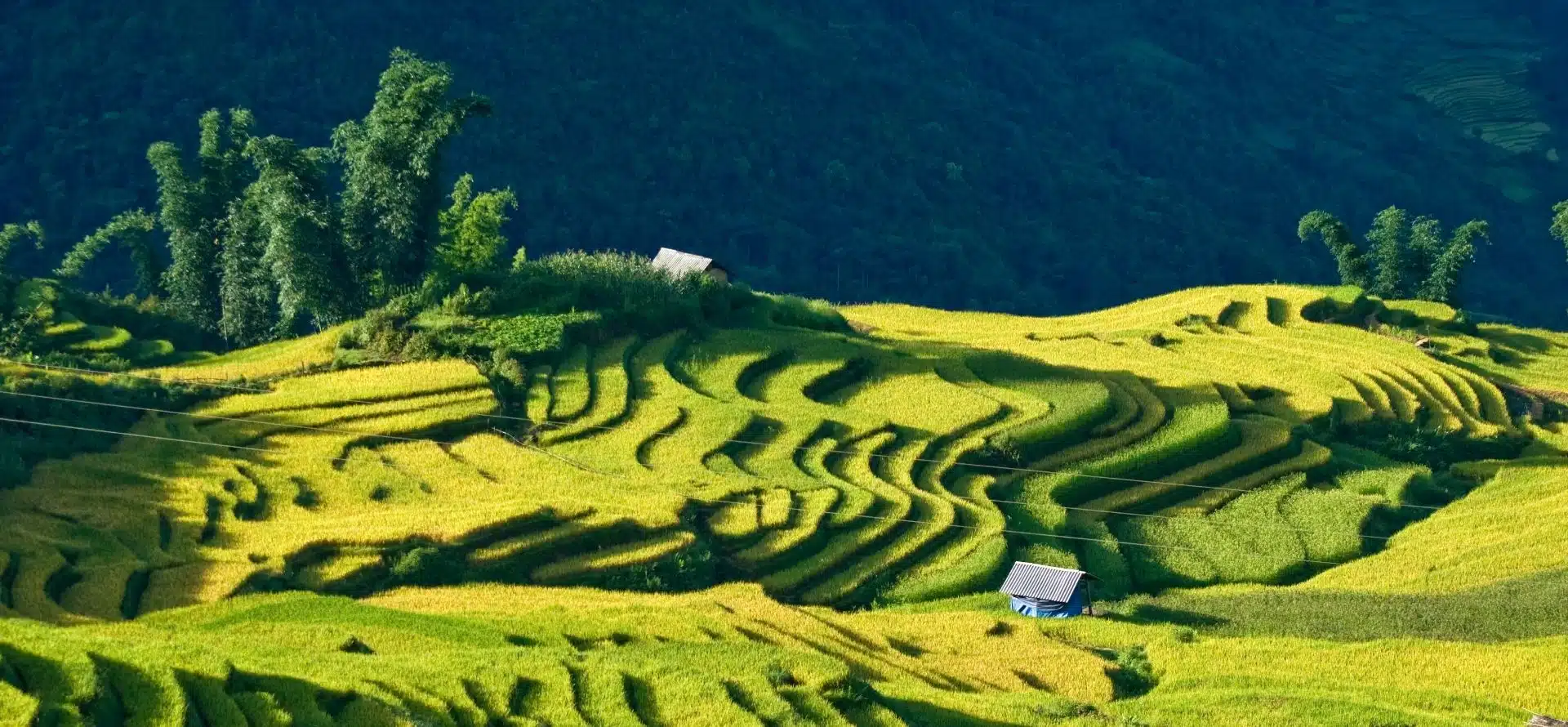
All things need to know before travelling to Mu Cang Chai
Mu Cang Chai is one of the most distinctive mountain landscapes in northern Vietnam, famous for its vast rice fields built on steep hillsides. Unlike Sapa or Ninh Binh, which are more tourist-friendly destinations, Mu Cang Chai remains a rather remote location. And this remoteness may be one of its greatest advantages.
Travelers arriving in this part of Vietnam are likely to be interested in the landscape, photography, and people, but not in urban tourism. Indeed, Mu Cang Chai is not a destination to visit if you are looking to rush from one spot to another. This destination needs to be explored slowly, along mountain roads, in villages, and from viewpoints offering a glimpse of a landscape shaped by rice cultivation.
Mu Cang Chai is not a destination to be visited in a hurry. Instead, one needs to take one’s time on mountain roads, in small villages, and from a distance overlooking a valley carved out by rice cultivation. For travelers still trying to figure out a trip itinerary to Vietnam, Mu Cang Chai can be a part of a trip to northern Vietnam, particularly if one wants to visit a more rural and less touristy part of Vietnam.
1. Where It Is / Overview
Mu Cang Chai is a mountainous district in the province of Lao Cai, about 300 km northwest of Hanoi. It takes about 6-7 hours by car from Hanoi to Mu Cang Chai, passing by Nghia Lo and crossing Khau Pha Pass, one of the most beautiful and scenic mountain passes in northern Vietnam.
Mu Cang Chai is located in the foot of Hoang Lien Son mountains, where Sapa and Fansipan are, but Mu Cang Chai is less developed and more rural in character.
What makes Mu Cang Chai special is that it is known for its terraced rice fields, which was designated as a National Heritage Landscape of Vietnam. These terraced rice fields are not merely for aesthetics but are working rice fields created by Hmong people over time to cultivate rice in the mountains.
Mu Cang Chai is a region of many small villages and valleys, and the most popular places in this region are:
- La Pan Tan
- Che Cu Nha
- De Xu Phinh
- Lim Mong Village
- Tu Le (nearby valley, often combined with Mu Cang Chai)
These areas form the core scenic region that travelers explore when visiting Mu Cang Chai.
2. Why Visit Mu Cang Chai / Highlights?
Mu Cang Chai is more about landscape and culture, rather than any kind of monument or historical site.
Terraced Rice Fields
The terraced rice fields are the primary reason why people travel to this destination. Depending on the time of year, the terraced fields change:
- May and June: Water season (water in terraced fields reflecting the sky)
- September and October: Golden rice harvest season
- July and August: Green rice season
The terraced rice fields in La Pan Tan, Che Cu Nha, and De Xu Phinh are considered to be the most beautiful and are recognized as protected landscape sites.
Khau Pha Pass
Khau Pha Pass is one of the highest mountain passes in Vietnam and is a highlight of the journey to Mu Cang Chai.
Ethnic Minority Culture
The culture in Mu Cang Chai is dominated by Hmong people, with a few villages of other ethnic minorities, such as the Thai, in the surrounding valleys, such as Tu Le.
Visitors to Mu Cang Chai, Vietnam, will witness:
- Traditional wooden houses
- Traditional terraced farming methods
- Traditional markets
- Textile weaving and traditional clothing styles
- Peaceful and quiet rural life
Note: This is not a tourist culture; this is just daily life in a remote region of Vietnam.
While compared to Sapa, Mu Cang Chai is quieter and more remote, it is also less developed for tourism. Travelers comparing these two options are trying to decide between Mu Cang Chai and Sapa rice terraces and may be looking for information on Mu Cang Chai vs Sapa rice terraces.
3. What to See & Do in Mu Cang Chai
La Pan Tan Rice Terraces
The most famous rice terraces in the region, La Pan Tan is often used as part of images representing Vietnam’s rice terraces. The rice terraces are steep, layered, and dense, creating visually appealing patterns.
Che Cu Nha
Che Cu Nha is not as popular as La Pan Tan but is just as beautiful. The rice terraces are more isolated and are best for photography and trekking.
De Xu Phinh
De Xu Phinh is a combination of rice terraces and Hmong villages. It is best for gaining insights into the lives and culture of the Hmong people and their rice terraces.
Lim Mong Village
The Lim Mong Valley is one of the most picturesque valleys in the region. The scenic route to the valley offers a wide view of rice fields and surrounding mountain ranges.
Tu Le Valley (Nearby)
The Tu Le Valley is part of many itineraries before reaching Mu Cang Chai. The attractions are:
- Wide rice fields
- Thai Ethnic Minority villages
- Hot springs
- Local cuisine, including sticky rice
Trekking & Photography
The best way to enjoy and appreciate the beauty and culture of Mu Cang Chai is to:
- Trek from one village to another
- Take photos at sunrise and sunset
- Drive slowly through the rice fields and mountain passes
- Visit local homes and homestays
This destination is more about exploring the beautiful landscapes and rice terraces.
4. Best Time to Visit Mu Cang Chai
The best time to visit Mu Cang Chai is during most months of the year; however, the landscape differs during each season.
Best times to visit:
- May – June: Water season
- September – Early October: Golden harvest season
- July – August: Green rice season
Weather notes:
- Winter (Dec – Feb): Cold and sometimes foggy
- Summer (Jun – Aug): Warm and sometimes heavy rain
- Harvest season (Sep – Oct): Cooler and dry
If you are visiting Vietnam in September or early October, Mu Cang Chai is one of the best places to visit for its landscape.
5. How to Get to Mu Cang Chai
From Hanoi to Mu Cang Chai
The most common way to travel to Mu Cang Chai from Hanoi is:
- Hanoi -> Nghia Lo -> Tu Le -> Khau Pha Pass -> Mu Cang Chai
- Travel time: It takes about 6-7 hours by car.
Due to the mountainous road conditions, most international travelers opt to hire a private car with a driver or a guided tour. Most trips start from Hanoi, so travelers may want to spend some time exploring Hanoi and looking into things to do in Hanoi before traveling to Mu Cang Chai.
Due to the mountainous and winding roads, most international tourists prefer to travel to Mu Cang Chai by:
- Private car and driver
- Joining a guided tour
- Joining an organized small group tour
While it is possible to self-drive to Mu Cang Chai, it is not advisable unless you are an experienced mountain driver.
There are no airports or train stations in Mu Cang Chai. The only way to reach Mu Cang Chai is by road.
6. Travel Tips for Mu Cang Chai
1. Plan enough time
Mu Cang Chai is a long way from Hanoi. This destination should be a minimum 2-3-day trip.
2. Choose the right accommodation
Most of the accommodation options are:
- Homestays
- Small guesthouses
- A few eco-lodges
It’s simple but more connected to nature.
3. Bring cash
There are limited ATMs in rural mountainous regions.
4. Prepare for weather changes
Weather conditions in mountainous regions may change rapidly. You should:
- Bring a light rain jacket
- Wear comfortable shoes
- Bring a warm jacket, particularly in the evenings
5. Travel slowly
It’s a destination where you should enjoy the journey, particularly when you cross Khau Pha Pass.
7. Who Mu Cang Chai Is Suitable For
Mu Cang Chai is best for travelers who:
- Like landscapes and photography
- Like exploring ethnic minority culture
- Like peaceful destinations rather than noisy tourist spots
- Like exploring rural Vietnam
- Like long but scenic drives
- Like planning a trip in northern Vietnam
It might not be best for travelers who:
- Like luxury resorts
- Have very little time
- Like destinations with a lot of things to do in close proximity
For travelers who love mountains and remote places, Mu Cang Chai can also be combined with other highland attractions in a northern Vietnam mountain loop trip, such as other places like Sapa or Ha Giang.
8.How Many Days to Spend in Mu Cang Chai
Recommended amount of time to spend: 2-3 days
Typical day-by-day plan:
- Day 1: Hanoi to Nghia Lo to Tu Le to Mu Cang Chai
- Day 2: La Pan Tan, Che Cu Nha, De Xu Phinh
- Day 3: Return to Hanoi via Khau Pha Pass and villages
This structure allows enough time to enjoy the landscapes without rushing.
9. How Mu Cang Chai Fits Into a Vietnam Itinerary
Mu Cang Chai is best included in a Northern Vietnam itinerary. The following destinations are commonly combined with Mu Cang Chai:
- Hanoi
- Ninh Binh
- Halong Bay or Lan Ha Bay
- Sapa (depending on the duration of the trip)
- Ha Giang (depending on the duration and type of trip)
When planning your Vietnam trip, it’s essential to consider that travel in Northern Vietnam requires time. Traveling in the mountains takes longer than expected. It’s vital to create an itinerary that’s not too exhausting.
This provides a balanced itinerary that includes culture, nature, and cruise. Many travelers also consider visiting Mu Cang Chai in combination with a cruise in Ha Long Bay to enjoy the mountain and Vietnam’s seaside scenery in one trip.
Sample itinerary for Northern Vietnam with Mu Cang Chai:
- Hanoi – 2 nights
- Ninh Binh – 1 night
- Halong Bay Cruise – 1 night
- Mu Cang Chai – 2-3 nights
- Hanoi
This itinerary provides a perfect combination of culture, nature, and a cruise Halong Bay experience.
Mu Cang Chai fits best into a northern Vietnam itinerary including Mu Cang Chai. It is often combined with Hanoi, Ninh Binh, Halong Bay or Lan Ha Bay, and sometimes Sapa or Ha Giang for travelers who want to explore the mountain regions in more depth.
10. Suggested Mu Cang Chai Itinerary (3 Days)
Day 1: Hanoi → Nghia Lo → Tu Le → Mu Cang Chai
- Scenic drive through mountain landscapes
- Stop in Tu Le Valley
- Cross Khau Pha Pass
- Overnight in Mu Cang Chai
Day 2: Mu Cang Chai Terraced Fields & Villages
- Visit La Pan Tan terraces
- Visit Che Cu Nha
- Visit De Xu Phinh
- Short village walks
Overnight in Mu Cang Chai or Nghia Lo
Day 3: Return to Hanoi
- Visit tea hills or villages on the way back
- Return to Hanoi in the afternoon
This is the most common structure for visiting Mu Cang Chai comfortably.
11. Conclusion
Mu Cang Chai is one of the most visually striking landscapes in Vietnam, and it is a completely different world from the urban and seaside destinations that are more popular with tourists. It is a place that is defined by its rural character, its mountainous terrain, and its ethnic minority culture, and it is not for the faint of heart as far as travel is concerned.
As a travel destination, Mu Cang Chai is best visited as part of a northern Vietnam trip, and it is not recommended as a destination for anyone looking to visit Vietnam. Due to the distance from Hanoi and the mountainous terrain, it is best to visit as a 2- to 3-day trip with a well-planned Mu Cang Chai tours and travel times.
It is not really a place to visit as there are no attractions to speak of, but it is more about gaining an appreciation for how people live in the mountains and how travel in northern Vietnam is as much about the journey as the destination.


