
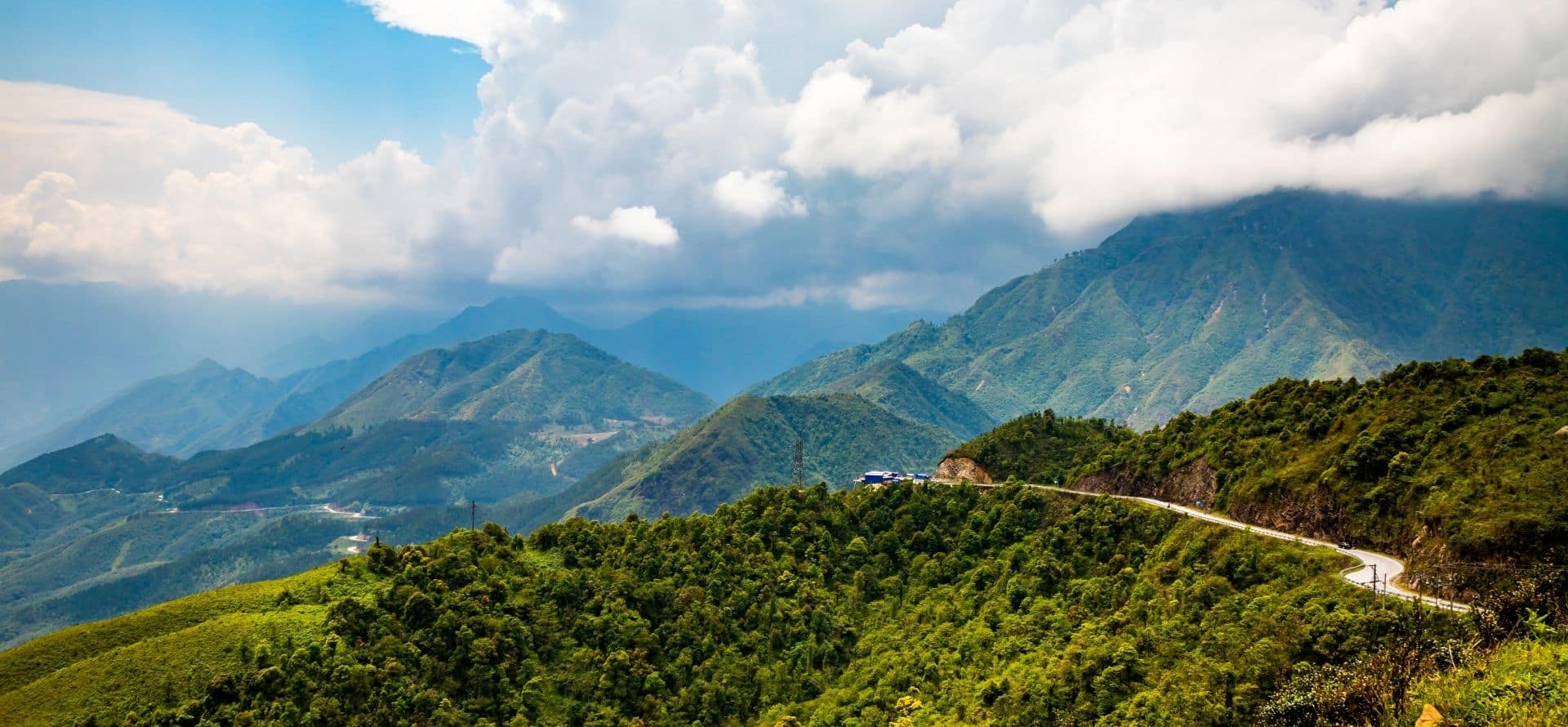

1. Where is Lai Chau?
Lai Chau is a mountainous border province, located in the Northwest region of Vietnam. It is about 390 km northwest of the capital Hanoi. Geographically:
- Bordering Yunnan province of China to the North.
- Bordering Lao Cai province to the East.
- It borders Dien Bien province to the West
- Bordering Son La province to the South.
2. How is Lai Chau unique?
The terrain of Lai Chau is created by mountain ranges running in the Northwest – Southeast direction. It has many high peaks, of which Pu Ta Leng peak is 3,096 m high. With high and steep hills, interspersed with many deep and narrow valleys. To the East is Hoang Lien Son mountain range, to the West is Song Ma mountain range.
Therefore, Lai Chau is a majestic and enchanting land, inviting visitors with the pristine beauty of the mountains and forests. Or the majestic terraced fields and the unique cultural identity of ethnic minorities.
Not only has beautiful natural scenery, Lai Chau also attracts tourists with its specialties full of mountain and forest flavors. Such as: dried buffalo meat, piglet, purple sticky rice, thang co, etc. Therefore, Lai Chau is a destination not to be missed for those who desire to explore the wild beauty. As well as learn about the diverse culture of the highlands of the Northwest of Vietnam.

3. When is the best time to visit Lai Chau?
Lai Chau is a majestic Northwest region with spectacular natural scenery and diverse culture. It attracts tourists with its unique experiences all year round. However, to have a complete and convenient trip, you should consider the time to travel to suit your interests and desires.
- Rice harvest season (September – October): This is the best time to admire the golden terraced fields. It creates a beautiful natural picture. You can visit famous places such as: Mu Cang Chai, Tu Le, Sin Ho, … to immerse yourself in the brilliant yellow color of the ripe rice season.
- Spring (January – March): Lai Chau in spring puts on a fresh beauty with forests of blooming ban flowers and peach blossoms. During this time, the weather is warm and pleasant. It is suitable for hiking, exploring ethnic villages and enjoying the fresh air.
- Summer (April – May): Also known as “water pouring season” in Lai Chau, when the terraced fields are filled with water. It creates a unique and impressive scene. You can also join the Water Festival of the Thai people, a fun and vibrant traditional festival.
- Winter (December – February): In winter, Lai Chau has a magical beauty with floating seas of clouds on the mountain tops. However, the weather is quite cold and there may be snow, so you need to prepare warm clothes and other necessary items.
- Rainy season (June – August): This is not the ideal time to travel to Lai Chau, because the roads are slippery and flash floods may occur. Before traveling to Lai Chau, you should learn carefully about the weather and prepare suitable luggage.
4. How to get to Lai Chau?
Lai Chau is a mountainous province in the Northwest of Vietnam. It has rather rugged terrain, so getting here requires careful preparation. Below are the popular means of transportation when traveling to Lai Chau:
4.1 Traveling to Lai Chau
- By bus: This is the most popular and economical means of transportation to get to Lai Chau. There are many reputable bus companies such as Hai Van, Hung Thanh, Ha Son,… with routes from Hanoi, Sapa, Dien Bien,… Travel time from Hanoi is about 8-10 hours, from Sapa is about 4-5 hours.
- By motorbike: Motorbike is an interesting choice if you love adventure and want to freely explore. However, you need to have experience driving on mountain passes and prepare well in terms of health and means. Note that the road to Lai Chau has many steep, winding passes, so you need to be especially careful.
- By private car: If you travel in a large group or family, a private car is a comfortable and convenient option. However, you need to drive carefully and pay attention to traffic signs because the mountain passes are quite dangerous.
- By plane: Currently, Lai Chau does not have an airport. You can take a flight to Dien Bien Phu airport, then travel by bus or taxi to Lai Chau. The distance from Dien Bien Phu airport to Lai Chau is about 190km.
4.2 Traveling in Lai Chau
Lai Chau has mainly mountainous terrain with many steep passes, so it is relatively difficult to travel. However, the main roads have been well invested. To travel in Lai Chau province, you can choose the following means:
- By motorbike/car: The most popular and convenient means of transport in Lai Chau are motorbikes and cars. Especially when you want to explore remote villages, motorbikes are the most suitable choice for the roads here. You can rent motorbikes at hotels, motels or motorbike rental shops.
- By taxi: Taxis are a safe and comfortable option, but are quite expensive.
- By walking: If you want to explore the natural beauty and the life of the local people, walking is a great way to experience if your accommodation is close to tourist attractions.

5. Sightseeings in Lai Chau
Lai Chau is a majestic and attractive Northwest region. It has many famous attractions with beautiful natural scenery and unique cultural features of ethnic minorities. Below are some famous destinations that you can refer to when traveling to Lai Chau:
5.1 Pu Sam Cap Cave
Pu Sam Cap Cave is a majestic karst cave complex, known as “Northwest’s most beautiful cave”. With more than 10 large and small caves, including 3 main caves, namely: Thien Mon, Thien Duong and Thuy Tinh. With its wild, majestic beauty and unique cave system. This is a destination not to be missed for those who love exploring nature and learning about geology.
5.2 Lai Chau Market
Lai Chau Market is the largest and busiest market in Lai Chau city. Here, all kinds of local specialties are sold such as dried buffalo meat, Chinese sausage, wild honey, cardamom, … and unique handicraft products. Therefore, you can explore the traditional culture of the people here. As well as shopping for souvenirs and enjoying local specialties.
5.3 Lai Chau Provincial Museum
Lai Chau Provincial Museum is a famous tourist destination located on Hoang Lien Son Road. Moreover, the museum is a place to preserve and display many artifacts, images, and documents about the history, culture, and people of Lai Chau. This is an ideal destination for you to learn about this land.
5.4 Na Luong Village
Na Luong Village possesses wild, poetic beauty with vast clouds and mountains and endless rice fields. In addition, the air here is fresh, cool and quiet, so it is very suitable for those who want to temporarily get away from the noise and dust of the city. In addition, when coming to Na Luong, you will be able to explore the traditional cultural beauty of the Lao people living here.
5.5 O Quy Ho Pass
O Quy Ho Pass is one of the highest mountain passes in Vietnam, at an altitude of nearly 2000m above sea level. You will be overwhelmed by the breathtaking, majestic and poetic beauty with vast forests and mountains reaching up to the clouds and winding mountain passes. Besides, amidst the cold winds, the mountain specialties such as grilled skewers, potatoes, corn, grilled eggs, bamboo rice or enjoying a cup of hot coffee from familiar small shops are strangely delicious. It will give you an unforgettable experience.
5.6 Rong May Glass Bridge
Rong May Glass Bridge is a famous tourist destination in Lai Chau. This place attracts visitors by the majestic beauty of the Northwest nature and the unique experiences when walking on the transparent glass bridge. In particular, the Rong May glass bridge is 500m long with a 300m glass bridge located on the top of O Quy Ho pass, 2,200m above sea level. In addition, there are many other items such as: entertainment area, resort area, food court,…
5.7 Tien Son Cave
Tien Son Cave or Dan Don Cave, is a spiritual tourist destination and wonderful natural discovery. With its wild beauty, unique cave system and mysterious legends, Tien Son cave promises to bring you memorable experiences.
5.8 Tac Tinh Waterfall
Tac Tinh Waterfall, also known as Love Waterfall, is an ideal destination for those who love trekking and nature exploration. Tac Tinh Waterfall possesses wild, majestic beauty with a 130m high waterfall, pouring down vertically. It forms a white curtain of water, foaming in the middle of a cool green space. Besides, at the foot of the waterfall is a lake of about 200m², clear and cool.
5.9 Na Khuong Water Wheel
Na Khuong Water Wheel is a unique symbol of the Northwest region. This place is famous for its giant water wheels. They take water from Nam Mu stream to irrigate the terraced fields and the green tea hills. Each water wheel has a diameter of 10 to 15 meters, made from bamboo, wood and reed. When you come here, you can take pictures, walk on the tea hills, take pictures and enjoy fresh tea.
5.10 Pu Si Lung Peak
Pu Si Lung Peak is one of the highest mountains in Vietnam, about 3,083m. And it is known as the “roof of the border”. Moreover, Pu Si Lung possesses a wild and majestic beauty with steep cliffs. Or vast primeval forests and lush green grass.
In addition, this is one of the challenging trekking destinations. But it is also extremely attractive to those who love to explore nature. When standing on the top of Pu Si Lung, you can take in the panoramic view of the majestic and poetic Northwest mountains and forests.
5.11 Milestone 17 – The Upper Da River
Milestone 17 – The Upper Da River is the border marker between Vietnam and China. This is also the confluence of Nam Nap stream (Nan Ma He) and Da river. Therefore, it is considered the starting point of the Da river in Vietnam.
5.12 Ha Nhi sacred rock
Ha Nhi sacred rock is also known as White stone. This is not only an important spiritual place for the people of Pa Thang. It is also a unique historical and cultural relic of Lai Chau province. This place attracts tourists by its wild, majestic beauty and the unique traditional cultural values of the Ha Nhi people.
Every year, on the occasion of the traditional New Year of the Ha Nhi people (usually in the third lunar month), Pa Thang people organize a White stone worship festival. The festival is an opportunity for people to express their respect to the mountain god and pray for good things for the village in the new year.
5.13 Pac Ma Hot Spring
Pac Ma Hot Spring is one of the most beautiful natural hot springs in Vietnam. With an abundant source of natural hot mineral water, the average temperature ranges from 38°C to 43°C. In addition, the Pac Ma hot spring area is surrounded by majestic, pristine mountains and forests. It creates a beautiful natural landscape.
5.14 King Le Loi Temple and Le Loi Stele
King Le Loi Temple and Le Loi Stele are a national historical and cultural relic cluster. It is also one of the important spiritual destinations of Lai Chau province. Here, a stone stele engraved with a poem by King Le Loi praising the victory over the Ming invaders and the majestic Northwest mountain and forest landscape is preserved.
5.15 Lai Chau Hydropower Plant
Lai Chau Hydropower Plant is the largest hydropower project in Southeast Asia. The project is located on the Da River, with a large reservoir and majestic natural scenery. You can visit the hydropower plant and take a boat ride on the lake.
5.16 Pu Dao Village
Pu Dao Village is a small village located at the foot of Pu Dao Mountain, at an altitude of 1,600m above sea level. In particular, this place is surrounded by majestic mountain ranges and lush primeval forests. Therefore, the climate here is always mild and cool all year round. In addition, it is also home to the Dao ethnic group with traditional wooden houses and beautiful terraced fields.
In addition, there is Pu Dao Mountain, 1,905m high. Pu Dao Mountain is a great challenge for those who love mountain climbing. From the top of the mountain, you can admire the whole view of Nam Nhun, the mountain ranges and the beautiful terraced fields.
In addition, Nam Nhun also has many other ethnic villages such as Pu Nhung, Muong Mo, Nam Hang, … With their own unique cultural features, it is worth exploring.
5.17 Bach Moc Luong Tu Peak
Bach Moc Luong Tu Peak is known as the fourth “roof of Indochina”. This is one of the highest peaks in Vietnam and Southeast Asia, 3,045m above sea level. Moreover, it has a diverse ecosystem, with a rich flora. It is characterized by primeval forests and brilliant wild flowers. Conquering this mountain peak will be an exciting challenge for those who love mountain climbing.
5.18 Heart Waterfall
Heart Waterfall is a romantic destination with a unique shape like a giant heart. In addition, this place is known as “Heart of Lai Chau“. Because of its unique beauty and romantic love story associated with the waterfall. Heart Waterfall is hidden under the canopies of ancient trees, winding between the mountains. Meanwhile, the water from above pours down with white foam, creating an extremely poetic and majestic scenery.
5.19 Dao San Plateau
Dao San Plateau is a famous tourist destination in Phong Tho. Located at an average altitude of 1,800m above sea level, this place not only has a cool climate all year round. It is also a majestic natural picture with overlapping mountain ranges, deep valleys. Or lush green primeval forests, picturesque terraced fields. In addition, this place also possesses unique cultural features of 5 ethnic groups: H’Mong, Dao, Thai, La Hu and Ha Nhi. In particular, there is a Dao San market held on Sundays, one of the largest markets in Lai Chau.
5.20 Vang Pheo village
Vang Pheo village is also known as “Beauty Valley“. This is an ancient village of the White Thai people. In addition, this place is surrounded by mountains, green terraced fields and the gentle Nam So stream flowing through. The natural scenery here gives you a sense of peace and relaxation.
5.21 Han Temple
Han Temple is an important historical and cultural relic and spiritual destination. It attracts many tourists and locals to visit and worship in Lai Chau. Han Temple was built in the 17th century, associated with the legend of Han. This is a beautiful, talented and brave girl of the Thai people.
Han sacrificed herself to protect the village from the invasion of the enemy. Every year, on the 15th day of the second lunar month, local people hold the Nang Han Festival to commemorate her merits. The festival takes place with many exciting cultural, sports and folk games activities.
5.22 Sin Ho Plateau
Sin Ho Plateau is known as the “second Sapa” of the Northwest with an average altitude of 900 to 1,800m above sea level. Moreover, it is also surrounded by majestic mountain ranges and lush primeval forests. Therefore, this place has a cool climate all year round, majestic natural landscapes with deep valleys, primeval forests. Or terraced fields stretching out and clear streams.
Pui Ta Phu Peak is the highest mountain in Sin Ho, with an altitude of 2,632m above sea level. You can conquer Pui Ta Phu peak to see the whole Sin Ho plateau from above.
5.23 Da O Mountain – Ong Tien Cave
Da O Mountain is an attractive spiritual tourist destination in Sin Ho. This place is associated with the legend of the Dao Khau people about the Fairy who forgot his umbrella. When he came down to earth to travel, over a long period of time, the umbrella turned into stone.
Ong Tien Cave is also known as Ta Phin Cave. It is hidden in the majestic limestone mountains, near the Da O Mountain area. In particular, this cave was formed by geological formations thousands of years ago, bringing a wild and mysterious beauty. In addition, this place is also associated with the legend of the Dao Khau people about the Fairy. He forgot his umbrella when he came down to earth to travel, over a long period of time, the umbrella turned into stone.
5.24 Tan Uyen Tea Hill
Tan Uyen Tea Hill is a “Green Masterpiece” in the middle of the Northwest. This is also a famous check-in spot that attracts many tourists and couples to take wedding photos. Stretching along National Highway 32, with a scale of up to 2,000 hectares and an age of 40-50 years. Moreover, it is blessed by nature with a mild, cool climate and fertile soil.
Tan Uyen Tea Hill is green all year round, creating an extremely impressive natural picture. When you come here, you will be immersed in the lush green space of the tea hills stretching far and wide. Or the green tea canopies rustling in the wind create an extremely majestic landscape.
5.25 Phieng Phat Village
Phieng Phat Village is a village inhabited by the Black Thai people. This place is known as an attractive community eco-tourism destination with hot mineral springs. Or the vast tea hills and majestic limestone mountains create a beautiful picture. In addition, the unique cultural features of the Black Thai people also add highlights to this place.
5.26 Tham Phe Fishing Village
Tham Phe Fishing Village is a famous resort located on the Ban Chat hydroelectric lake. It is also known as “Ha Long Bay” in the Northwest mountains and forests. This place attracts a large number of tourists every weekend thanks to its wild, poetic beauty with majestic mountains surrounding it. Or the lake surface is as calm as a mirror and the small, pretty stilt houses scattered on the mountainside.
5.27 Muong Than Field
Muong Than Field is one of the largest and most beautiful fields in the Northwest. When traveling here in July, August, September every year, you can explore the vast fields of Muong Than in the ripe rice season. With rice flowers flying in the wind, under the golden sunlight, the scenery with the idyllic countryside captivates every visitor.
5.28 Ao Tien
Ao Tien is a famous eco-tourism destination in Than Uyen. This place is blessed by nature with a wild, poetic landscape. With clear blue lakes, surrounding forests and majestic mountains. Therefore, Ao Tien is an ideal destination for those who love nature and want to find a quiet space to relax.
5.29 Khau Co Pass
Khau Co Pass is also known as “Northwest Heaven’s Gate”. Moreover, this is also one of the most dangerous and majestic passes in Vietnam, located on Highway 279, connecting the two provinces of Lao Cai and Lai Chau. Khau Co Pass is about 30km long, winding through high mountains, primeval forests and deep valleys. Therefore, Khau Co Pass is also one of the attractive destinations for those who love adventure and exploring nature.

6. Specialties when traveling to Lai Chau
Lai Chau is a wild and majestic Northwest region, it not only has beautiful natural scenery. It is also famous for its unique specialties, bearing the flavour of the mountains and forests. Below are the top famous specialties in Lai Chau that you cannot miss:
6.1 Smoked buffalo meat
Smoked buffalo meat is a typical dish of the Northwest mountainous region. People make it from fresh buffalo meat, marinated with special spices and then smoked over a wood stove. Moreover, smoked buffalo meat has a rich sweet taste, is chewy and delicious, and has a characteristic aroma of kitchen smoke.
6.2 Piglet
Piglet is a small breed of pig, raised by ethnic people on the hillsides. They eat natural vegetables, so their meat is very delicious and firm. In addition, piglets are often grilled or roasted whole, with crispy skin, sweet meat, dipped in chili salt or mac khen.
6.3 Lai Chau purple sticky rice
Lai Chau purple sticky rice is a unique specialty of the Northwest mountainous region. It carries the rich flavor and cultural identity of ethnic minorities. Moreover, this sticky rice dish is not only attractive because of its characteristic purple color created from the leaves of the khau cam tree (also known as the cam tree). But also because of its delicious, soft and nutritious flavor.
6.4 Ash-buried goby
Ash-buried goby is a unique specialty of Lai Chau, imbued with the flavor of the Northwest mountains and forests. This dish is not only a delicious dish but also a part of the unique culinary culture of the local people.
The main ingredient of this dish is small stream goby, which is often caught in Tung Lam stream. Moreover, this type of fish is small in size, only the size of a finger, but the meat is very firm, sweet and fragrant. After being cleaned and marinated with spices, such as ginger, lemongrass, chili, mac khen, herbs,…Then, they wrapped the goby in dong leaves, and buried in hot ash. This cooking method helps the fish cook evenly, retain moisture and its characteristic flavor.
6.5 Pa Pinh Top
Pa Pinh Top, also known as grilled stream fish, is a famous specialty dish of Lai Chau. It attracts tourists by its delicious, unique flavor and the strong imprint of the culinary culture of the Black Thai people.
In particular, people prepare this dish from fresh stream fish, usually carp, silver carp or grass carp. After being cleaned, the fish will be cut along the back instead of the belly. Then, they marinate it with spices according to the traditional recipe of the Black Thai people. Spices for marinating the fish include: salt, chili, mac khen, ginger, lemongrass, … it creates a rich and characteristic flavor for Pa Pinh Top.
6.6 Bamboo shoot salad with ban flowers
Bamboo shoot salad with ban flowers is a famous specialty dish of Lai Chau. People made it from fresh ingredients of the Northwest mountains. It brings a characteristic sour, spicy and slightly bitter taste.
6.7 Sung Phai corn wine
Sung Phai corn wine is a famous specialty of Lai Chau, especially in Nam Loong commune, Lai Chau city. Moreover, Sung Phai corn wine is made from native corn, wild yeast and natural spring water. In addition, corn is carefully selected, ensuring quality and natural sweetness. Wild yeast is the secret to creating the characteristic flavor of the wine.
In addition, people process this type of wine using traditional manual methods for a long time. Therefore, it has a unique flavor and is popular with locals and tourists.
6.8 Lai Chau Rock Moss
Lai Chau Rock Moss is a unique and rare specialty of the Northwest mountains. It is only available in spring when young moss grows on rocks in streams. This dish is not only delicious but also considered a valuable medicine with many health benefits.
Rock moss grows naturally on large rocks in streams or waterfalls with fast-flowing water. People often harvest moss in the third lunar month, when the moss is the youngest and softest. Moreover, people also process rock moss into many delicious dishes. Such as: rock moss stir-fried with meat, rock moss soup, rock moss salad, grilled rock moss, … Each dish brings a unique and attractive flavor.
6.9 Thang Co
Thang Co is a famous specialty dish of the Northwest region of Vietnam. And in Lai Chau, you can enjoy this dish with its own unique flavor. People usually made Lai Chau Thang Co made from horse meat, but they can also make it from beef or buffalo meat. And spices such as cardamom, bitter leaves, anise seeds, lemongrass, chili, garlic, … Therefore, this dish has a rich, spicy flavor and is considered a dish that represents the heart.
7. Accommodation when traveling to Lai Chau
If you want to experience convenient and comfortable services, the hotel is a good choice. You can find many hotels from budget to luxury in Lai Chau such as:
- Muong Thanh Grand. Address: 113 Le Duan, Tan Phong, Lai Chau city, Lai Chau province.
- Hoang Nham Luxury Hotel. Address: 30 Thang 4, Tan Phong ward, Lai Chau city, Lai Chau province.
- Anh Hong Hotel. Address: Thuy Son Park, 027 Bo Ho road, Tan Phong, Lai Chau.
- The Birdhouse Bungalow Vang Pha village. Address: Vang Pha village, Nam Mo commune, Sin Ho district.
- Sin Suoi Ho Hideaway Homestay. Address: Coc San village, Muong Te commune, Muong Te district.
- Vang A Chinh Homestay. Address: Sin Suoi Ho village, Nam Mo commune, Sin Ho district.
- A Hoa Homestay. Address: Ban Sin Suoi Ho, Nam Mo Commune, Sin Ho District.
- Ban Tham Ecolodge Homestay. Address: Ban Hon Commune, Tam Duong District, Lai Chau Province.
8. Some important notes when traveling to Lai Chau
To ensure a safe and complete trip to Lai Chau, you should refer to some necessary notes below:
- You should book a room in advance, especially during the peak tourist season (September – November and March – May).
- You should bring warm clothes, hats, scarves, gloves and other necessary items. Because the weather in Lai Chau is quite cold, especially in winter.
- Check carefully the information about the location, facilities and prices of the accommodation before booking a room.
- If you want to experience the local culture, choose a homestay or guesthouse in the villages.
- You should bring some cash to conveniently pay for services, buy goods in the villages and traditional markets.
- And you should wear suitable shoes for climbing mountains and walking on steep terrain.
- You shouldn’t drive yourself if you are not familiar with the terrain, especially during the rainy months. Absolutely do not drink alcohol when driving.
- Bring mosquito and insect repellent. And bring medicine in case of motion sickness or cold
- Keep the environment and landscape of the destination green, clean and beautiful. Do not litter.
With updated and useful information about Lai Chau travel experience. Which Origin Vietnam – the leading tour operator, has just shared in the above article. Hopefully it will help your upcoming vacation in Vietnam. We are also committed to accompanying you on the Lai Chau tour to explore this majestic and breathtakingly beautiful land with the most interesting experiences.


